
FACELIFT
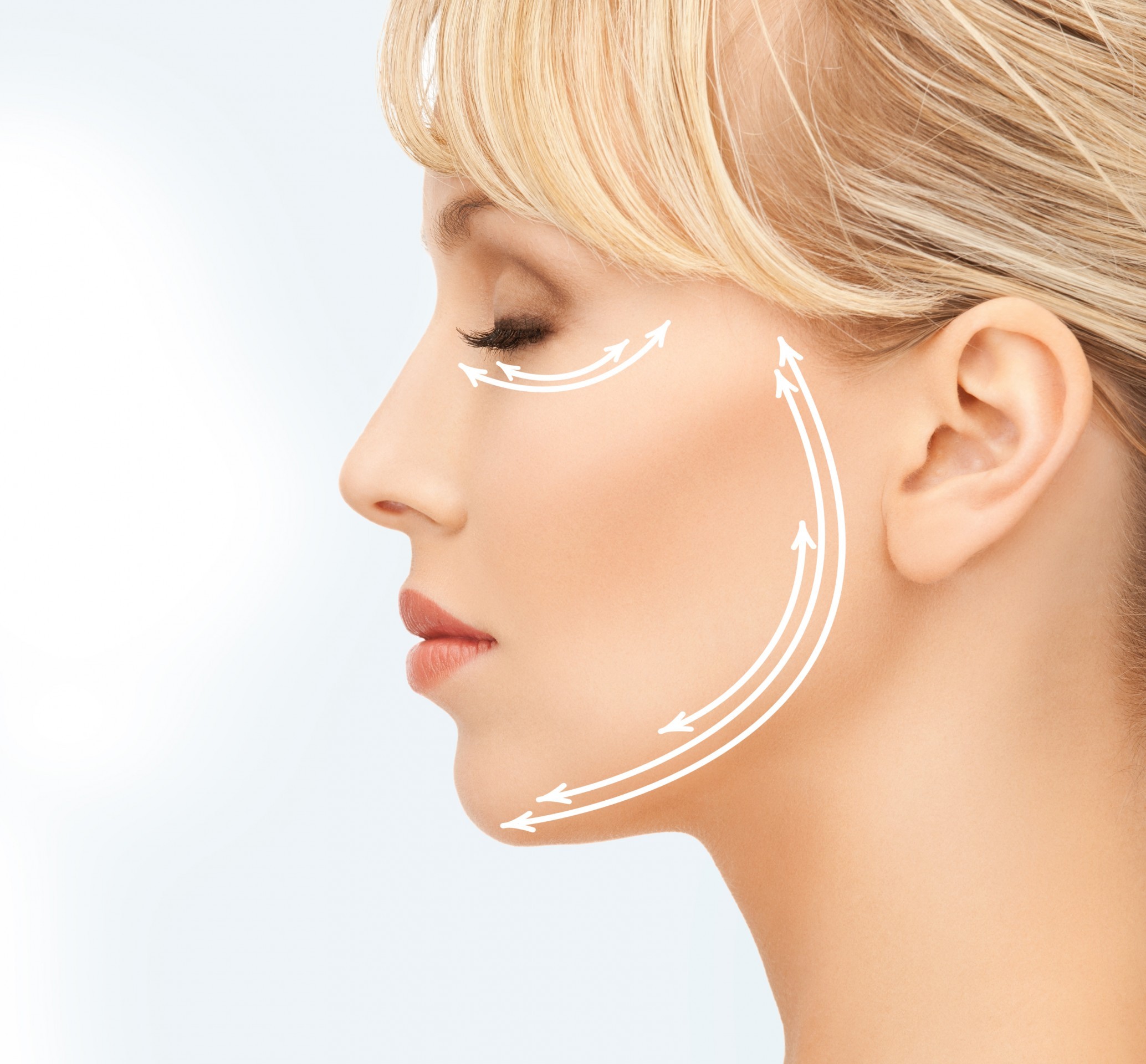
Facelift, or Rhytidoplasty, is the surgery for facial rejuvenation. In this surgery, the excess skin of the face is removed and the skin is also gently tightened to look younger. The excess skin of the neck is also treated for a better result. In addition to the skin, the deeper structures are also treated (called the SMAS – Superficial Muscular-Aponeurotic System). In the most modern Facelift techniques, fat grafting is also performed to replace facial volume that is lost over the years.
A Facelift may be indicated for people of a wide range of ages, from 35-40 years old (mini-lift) to 70-80 years old (secondary Facelifts). But this does not mean that a 40-year-old patient necessarily already needs a mini-Facelift. The indication varies from person to person and depends greatly on the condition and quality of the facial skin.
The Facelift is a surgery that is performed more and more. With the job market increasingly competitive and “personal image” even becoming a differentiating factor, in the United States, for example, the Facelift is even considered an investment in one’s professional career. It is a way to stay in the job market longer, since with a well-performed facelift the person looks 10-15 years younger.
Types of Facelift:
Mini-Facelift – a smaller-scale Facelift procedure, usually performed on people aged 40-50 who have mild laxity that can no longer be corrected with non-surgical cosmetic methods (fillers, botox, lasers, peels).
Facelift – the Standard treatment. It is the complete surgery of the face, with the greatest and best results. In it, the regions of the face and neck are corrected, and it can also be combined with correction of the forehead region with a Brow Lift. This surgery is often combined with blepharoplasty (eyelid surgery) and facial fat grafting.
Brow Lift – the stage of the Facelift that corrects the forehead and eyebrow region. In mild cases, this surgery can be replaced by the use of botulinum toxin (BOTOX / DYSPORT). The Brow Lift is often combined with Blepharoplasty.
ASSOCIATED PROCEDURES:
Facial Fat Grafting (learn more): fat grafting to the face aims to replace the facial volume that is lost over time. This procedure is almost always combined with Facelifts, but it can be performed on its own in younger patients who do not yet have an indication for a Facelift.
Blepharoplasty (learn more): this is plastic surgery of the eyelids, almost always combined with Facelifts, but it is often performed years before the Facelift when necessary. It can be combined with facial fat grafting, a Brow Lift, or even chin liposuction.
Chin Liposuction (learn more): this consists of liposuction of the neck and can be combined with the Facelift or performed years earlier if the patient already has an indication.
Lip Lift (learn more): the lifting of the lips. It is often combined with Facelifts and can even be considered part of the surgery, since the lips, like other parts of the body, become elongated and lax over the years.
Buccal Fat Removal (learn more): this is the surgery to remove fat from the cheeks (Bichat’s fat pad). It can be combined with the Facelift. It may seem paradoxical, but in many patients we remove the excess fat from the cheek with Buccal Fat Removal and graft fat into other areas of the face, such as the malar region and the folds.
SURGICAL INCISION (SCAR LOCATION)
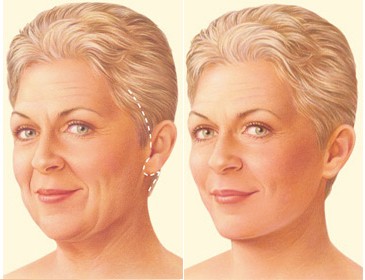
One of the most frequent concerns of patients is the Facelift scar. The scars from the surgery are all hidden or “camouflaged” in skin folds. The skin of the face is the skin that forms the best scars in the body. The scars from the procedure lie within the hair or right at the edge of the hairline, along the contour of the ear (ear fold – almost imperceptible), and behind the ear.
BEFORE SURGERY
MEDICAL ASSESSMENT: The patient must have a consultation for a detailed assessment and to choose the best surgical option together with the surgeon. A careful health assessment is carried out, since patients who are candidates for this surgery are often older.
TESTS: preoperative tests will be requested, including blood tests, urine tests, chest X-ray, electrocardiogram, exercise stress test and, if deemed necessary, an evaluation by a cardiologist and other tests.
SCHEDULING THE SURGERY:
The surgery is performed in a hospital setting, under local anesthesia with sedation or general anesthesia.
The surgery lasts 4 to 5 hours and the patient spends one night in the hospital.
AFTER SURGERY
Cold compresses must be used in the first few days.
Avoid sun exposure until the edema (swelling) and ecchymosis (bruising) subside
After surgery, care must be taken not to engage in intense physical exertion.
Bathing, eating, and brushing teeth are allowed from the first day.
Light daily activities and work that does not require physical exertion are allowed after 1 week.
Physical activities will be allowed at around 4 weeks.
AGE: From 35-40 years old
ANESTHESIA: Local with sedation or General
SURGERY DURATION: 4-5h
HOSPITAL STAY: 12 – 24 hours
SCAR: Around the ear
RECOVERY TIME: 1 – 2 weeks
EXERCISE: After 4 weeks.
This procedure should only be performed by a qualified Plastic Surgeon, after a careful medical assessment.
Safety first. Before any surgery, we individually assess factors such as biological age, comorbidities, and risk of thrombosis, following evidence-based protocols. Learn how we assess safety in each procedure →
Dr. Marco Longo — CRM 122.172 — RQE 58.785
Plastic Surgeon — PhD | USP
Specialist in High-Definition Body Contouring
Follow us on Instagram:
 https://www.instagram.com/drmarcolongo/
Visit our new YouTube channel:
 https://www.youtube.com/@drmarcolongo
Learn more about Dr Marco Longo – Plastic Surgeon
If you have any questions, please send them to: dr.marco.longo@gmail.com