
Rhinoplasty in São Paulo: Aesthetic and Functional Nose Surgery
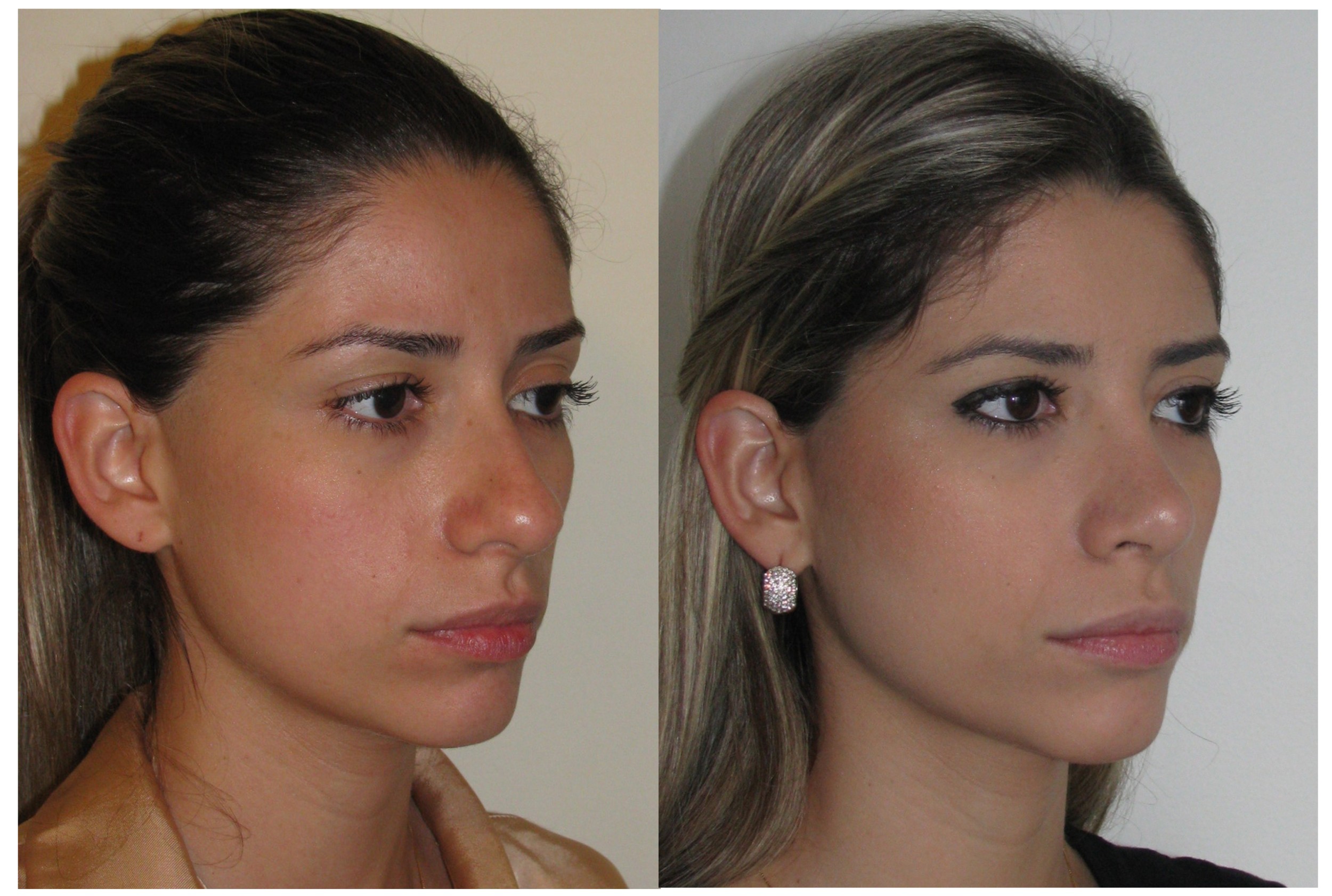
Preservation rhinoplasty – 1-year result
Rhinoplasty is plastic surgery of the nose. It redefines nasal aesthetics — dorsum, tip, width, and proportion — and, when indicated, also corrects the functional part, improving breathing. When the septum is corrected during the same surgery, the procedure is called septorhinoplasty.
It is, at the same time, one of the most sought-after surgeries and one of the most technical in plastic surgery: the nose is the central structure of the face, and millimeters change the expression of an entire face. That is why rhinoplasty is always individualized — no two rhinoplasties are the same.
At the practice of Dr. Marco Longo — plastic surgeon in São Paulo, CRM-SP 122.172, RQE 58.398, Full Member of the Brazilian Society of Plastic Surgery (SBCP), PhD from USP, Specialist in Rhinoplasty from USP, and preceptor of the USP Rhinoplasty Group for more than 5 years — each surgery is planned based on the anatomy, features, and goals of that patient, combining the aesthetic result with respiratory function.
What does rhinoplasty correct?
Rhinoplasty can address three areas, alone or combined:
Aesthetic correction
- Reduce or increase the size of the nose;
- Remove the dorsal hump (the “bump” or “little bone” on the bridge of the nose);
- Refine and redefine the nasal tip;
- Adjust the width of the nasal alae and the projection of the tip;
- Correct visible deviations and asymmetries of the nose.
Functional improvement
- Correct a deviated septum and improve breathing;
- Treat structural changes resulting from trauma or congenital defects;
- Treat nasal valve collapse, a frequent cause of a “stuffy nose” that does not improve with medication.
Nasal reconstruction
- Repair deformities caused by accidents, previous surgeries, or medical conditions.
Rhinoplasty or septorhinoplasty: what is the difference?
The difference lies in the septum.
| What is done | When it is indicated | |
|---|---|---|
| Rhinoplasty | Aesthetic reshaping of the nose — dorsum, tip, bones, and cartilage | When the goal is aesthetic and breathing is preserved |
| Septorhinoplasty | The same aesthetic reshaping + correction of the nasal septum | When there is an associated deviated septum, nasal obstruction, or breathing difficulty |
In practice, septorhinoplasty is widely used, because aesthetic and breathing complaints often appear together in the same patient. Breathing assessment is part of the rhinoplasty consultation — it is not a separate topic. In addition, when septal cartilage is harvested to structure the nose, the septum is corrected.
A systematic review with meta-analysis published in Laryngoscope, bringing together studies on septoplasty in patients with nasal obstruction, documented significant and sustained improvement in validated obstruction scores in the postoperative period (Alessandri-Bonetti et al., 2023).
Who is a candidate for rhinoplasty?
Rhinoplasty is usually indicated for those who have:
- Dissatisfaction with the shape of the nose — a hump on the dorsum, a drooping, bulbous, or wide tip, a long nose, or a nose out of proportion with the face;
- Nasal deviation or asymmetry, congenital or post-traumatic;
- Breathing difficulty due to a deviated septum, valve collapse, or structural changes;
- A desire for facial harmonization — the nose is the center of the face and its proportion changes how the whole face is perceived;
- An unsatisfactory result from a previous surgery, which constitutes an indication for secondary or tertiary rhinoplasty.
The indication, the technique, and the degree of change are never defined by photo or by message. They depend on the physical examination of the nose — skin, thickness, cartilage support, internal assessment of the airways — and on the conversation about expectations.
Preservation or structural rhinoplasty: which technique is best?
This is currently the main technical discussion in modern rhinoplasty, and the short answer is: neither is superior in absolute terms. The choice depends on each patient’s anatomy and surgical goals — and, in most cases, the best plan combines both in the same surgery.
Where we came from: classic rhinoplasty
Historically, classic rhinoplasty was based on more extensive resections of cartilage and of the osteocartilaginous block of the dorsum. The nose was “reduced” by removing structure.
The problem with this degree of resection appeared in the long term: removing support can compromise breathing dynamics and the structural stability of the nose over the years. A nose that looked beautiful at six months could lose definition, collapse in the middle third, or obstruct breathing years later.
It was this limitation that drove the two modern approaches.
Preservation rhinoplasty: what it is
Preservation rhinoplasty works by maintaining as much of the native anatomy of the nose and the soft tissues of the region as possible — instead of removing the dorsum, it repositions it.
What it delivers:
- Preservation of structures — avoids unnecessary removal of cartilage and functional tissues;
- Functional integrity — keeps breathing dynamics preserved, because the nasal roof is not opened;
- Predictability of the dorsum — reduces irregularities and unwanted scarring changes along the line of the nasal dorsum, precisely because the original dorsum is maintained.
Structural rhinoplasty: what it is
Structural rhinoplasty relies on reinforcing the osteocartilaginous support of the nose. It is not classic surgery under another name: the difference lies in resecting only what is strictly necessary and rebuilding the support with grafts.
What it delivers:
- Mechanical support — uses cartilage grafts to reshape and anchor the nasal structures;
- Less resection than the classic technique, with active reconstruction of the support;
- Definition and durability — allows the nasal tip to be shaped precisely and that result to remain stable over time.
Direct comparison
| Preservation rhinoplasty | Structural rhinoplasty | |
|---|---|---|
| Principle | Preserve and reposition the native anatomy | Resect the minimum and rebuild the support with grafts |
| Nasal dorsum | Maintains the original line, with fewer irregularities | Reshaped; requires reconstruction of the middle vault |
| Nasal tip | More subtle modifications | Precise control of projection, rotation, and definition |
| Use of grafts | Less | Central to the technique |
| Best indication | Dorsums with an already favorable line, smaller modifications | Tips that require significant reshaping, noses with little support, secondary cases |
The answer in practice: the hybrid approach
In many cases, the ideal surgical plan combines both approaches in the same procedure:
- Nasal dorsum → preservation technique, to maintain the natural line and the stability of the nasal roof;
- Nasal tip → structural technique, to achieve precise definition with support that lasts.
This combination seeks to unite the natural finish of the dorsum with the precise support of the tip, delivering a harmonious and lasting result — and it is the reasoning we apply in most cases.

Postoperative hybrid rhinoplasty – preservation on the nasal dorsum and structural on the tip.
Reference video: Rhinoplasty — preservation vs. structural technique: which is best? — Dr. Marco Longo
What the scientific evidence shows about this comparison
The indexed literature of recent years has been testing exactly this question, with results that are consistent with one another:
- A systematic review with meta-analysis published in the Journal of Plastic, Reconstructive & Aesthetic Surgery (10 studies, 1,339 patients) compared dorsal preservation and dorsal reduction: preservation was associated with fewer dorsal irregularities and greater early aesthetic satisfaction, with a higher rate of residual or recurrent hump, and no difference in standardized functional outcomes or in the need for revision (Ribeiro et al., 2025).
- A meta-analysis of patient-reported outcomes in Aesthetic Plastic Surgery (6 studies, 753 patients) found better aesthetic satisfaction with preservation up to 6 months, with no significant difference after that, and equivalent nasal function between the techniques at 1 year of follow-up (Kim et al., 2025).
- A systematic review with meta-analysis of functional outcomes (22 studies, 2,058 patients) concluded that preservation and structural rhinoplasty produce comparable functional results, both with significant improvement in validated scores (Chan et al., 2026).
- A systematic review in Frontiers in Surgery reached the same reading: comparable safety and function, with possible aesthetic advantages of preservation in well-selected patients, and evidence still limited by heterogeneity of techniques and short follow-up (Barnawi et al., 2026).
Translation for the patient: both techniques work. The difference is not which one is “better,” but which one is better for your nose — and that is exactly what is defined in the consultation.
Open or closed rhinoplasty: what is the difference?
This is a different discussion from the previous one. “Open or closed” refers to the access route — how the surgeon reaches the structures of the nose — not to the technical principle.
Closed rhinoplasty (endonasal)
All incisions are inside the nostrils, with no cut outside the nose and no external scar. It is the route indicated for smaller surgeries and repairs, when the necessary modifications do not require wide exposure of the structures.
Open rhinoplasty
It involves a small incision on the columella (the strip of tissue between the nostrils), which allows direct opening and visualization of the cartilages. It is the route that allows more improvement in the aesthetics of the nasal tip, because it gives direct access and a complete view for positioning structural grafts and for precise suturing of the alar cartilages. The columella scar is small and, once matured, usually becomes discreet.
Which of the two is better?
A systematic review with meta-analysis published in Plastic and Reconstructive Surgery — Global Open, with 20 studies and 1,067 patients analyzed, found no significant difference between the open and closed routes in aesthetic satisfaction (ROE), nasal obstruction (NOSE), edema, ecchymosis, operative time, or complication rate. The authors’ conclusion is direct: the choice should be individualized according to the patient’s needs and the surgeon’s experience (Abi Zeid Daou et al., 2025).
In other words: the access route is not what defines the quality of the result. What defines it is the planning and the technical execution.
How the surgery is performed, part by part
Nasal dorsum: hump, rasping, and osteotomy
The treatment of the dorsum depends on what needs to be corrected:
- Rasping of the bones — when the correction is only of the bony contour of the dorsum, with no need to mobilize the base;
- Planned nasal fracture (osteotomy) — performed depending on the indication, when it is necessary to narrow the bony base or correct a deviation. It is not mandatory in every rhinoplasty;
- Dorsal preservation technique — when the dorsal line is favorable and can be lowered without being opened.
When osteotomy is necessary, modern instrumentation reduces the impact on the postoperative period. A systematic review with meta-analysis comparing piezoelectric osteotomy with conventional osteotomy found less edema and less periorbital ecchymosis in the postoperative period with the piezoelectric technique (Tsikopoulos et al., 2020).
Nasal tip: refining without compromising breathing
The aesthetic treatment of the tip — refining, defining, adjusting projection and rotation — is always done with functionality in mind. A tip refined only by removing cartilage tends, over time, to lose support and collapse on inspiration.
That is why structural grafts are used, which give the tip the desired shape and keep it firm: columellar support grafts, tip definition grafts, and alar cartilage reinforcement grafts, as the case requires.
Septum and nasal valve: the part no one sees
When there is a deviated septum or narrowing of the internal nasal valve, the correction is made during the same surgery. Reinforcing the middle third with spreader grafts or with autospreader flaps is the classic maneuver to open the internal valve and prevent narrowing after reduction of the dorsum.
A systematic review with meta-analysis in Aesthetic Plastic Surgery brought together 52 studies and, in the analysis of 17 of them with the NOSE score, documented a pooled improvement of about 24 points in nasal obstruction, with no difference between spreader graft and autospreader flap (Buba et al., 2022).
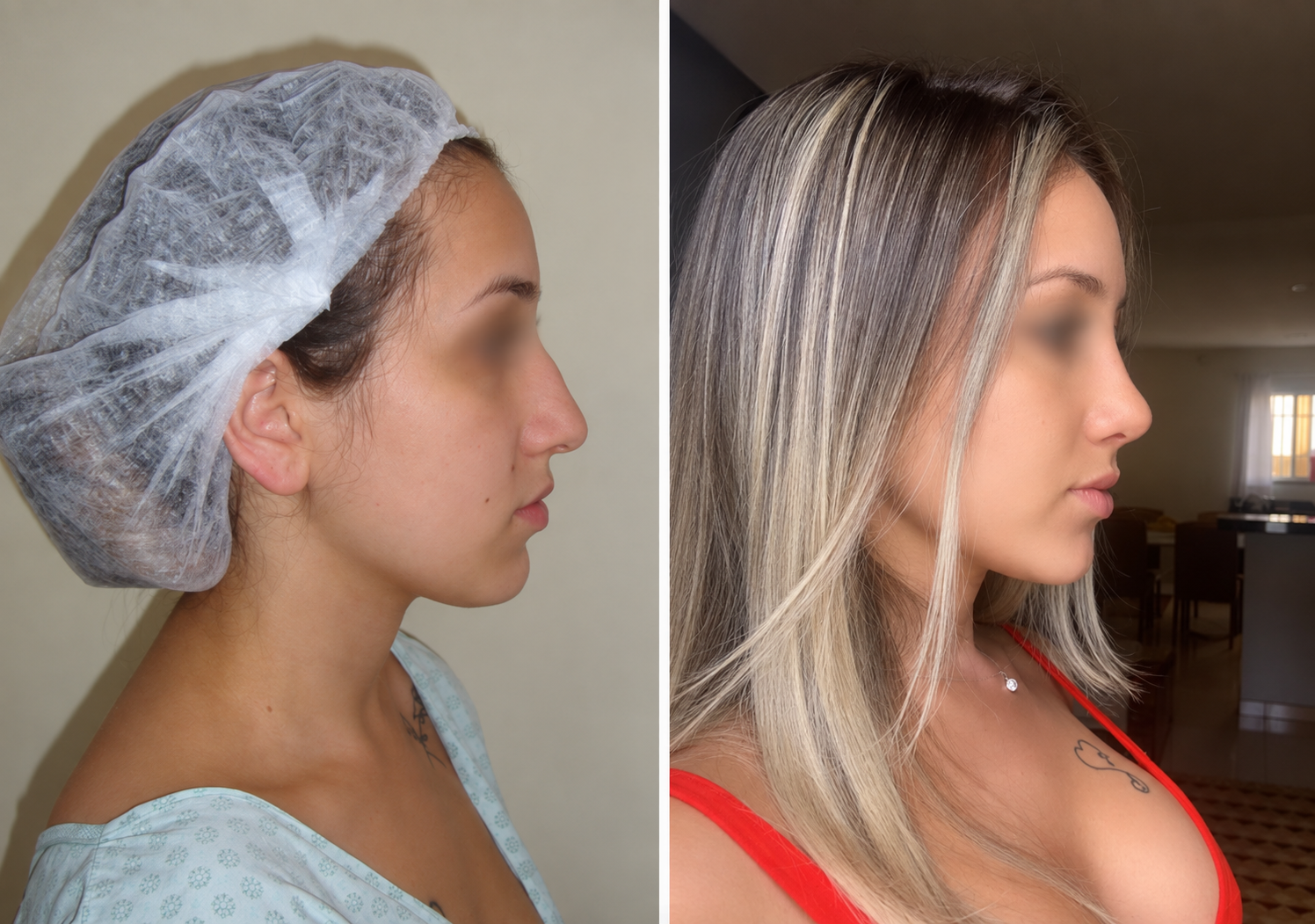
Open rhinoplasty case for a broader approach to the nasal tip. Preservation on the dorsum with nasal fracture to lower and narrow the dorsum.
Primary, secondary, and tertiary rhinoplasty
| What it means | Complexity | |
|---|---|---|
| Primary rhinoplasty | The patient has never had nose surgery | Standard |
| Secondary rhinoplasty | There has already been one previous rhinoplasty | More complex |
| Tertiary rhinoplasty | There have already been two or more previous surgeries | Significantly more complex |
Secondary and tertiary cases require more operative time and, almost always, the use of grafts to rebuild the structure that was removed or that lost support. The sources of cartilage are:
- Nasal septum — first choice when septal cartilage is still available;
- Ear cartilage (auricular concha) — useful for curved grafts and grafts with lower structural demand;
- Costal cartilage (rib) — indicated when a large amount of cartilage or rigid support is needed, typical of secondary and tertiary cases and of reconstructions.
A meta-analysis published in BMC Surgery, bringing together 6 studies and 888 patients who underwent rhinoplasty with rib graft, found a pooled complication rate of 7% to 8% — predominantly minor, such as infection, bending (warping) and displacement of the graft — with pooled satisfaction of about 92% (Wang et al., 2025).
Surgery fact sheet
| Item | Information |
|---|---|
| Anesthesia | General anesthesia, as it offers greater comfort and safety |
| Duration | 3 to 5 hours (longer in secondary and tertiary cases) |
| Access route | Open or closed, defined during planning |
| Technical principle | Preservation, structural, or hybrid — according to the anatomy |
| Osteotomy | Performed only when indicated |
| Grafts | Septum, auricular concha, or costal cartilage, as needed |
| Hospital stay | According to individual assessment |
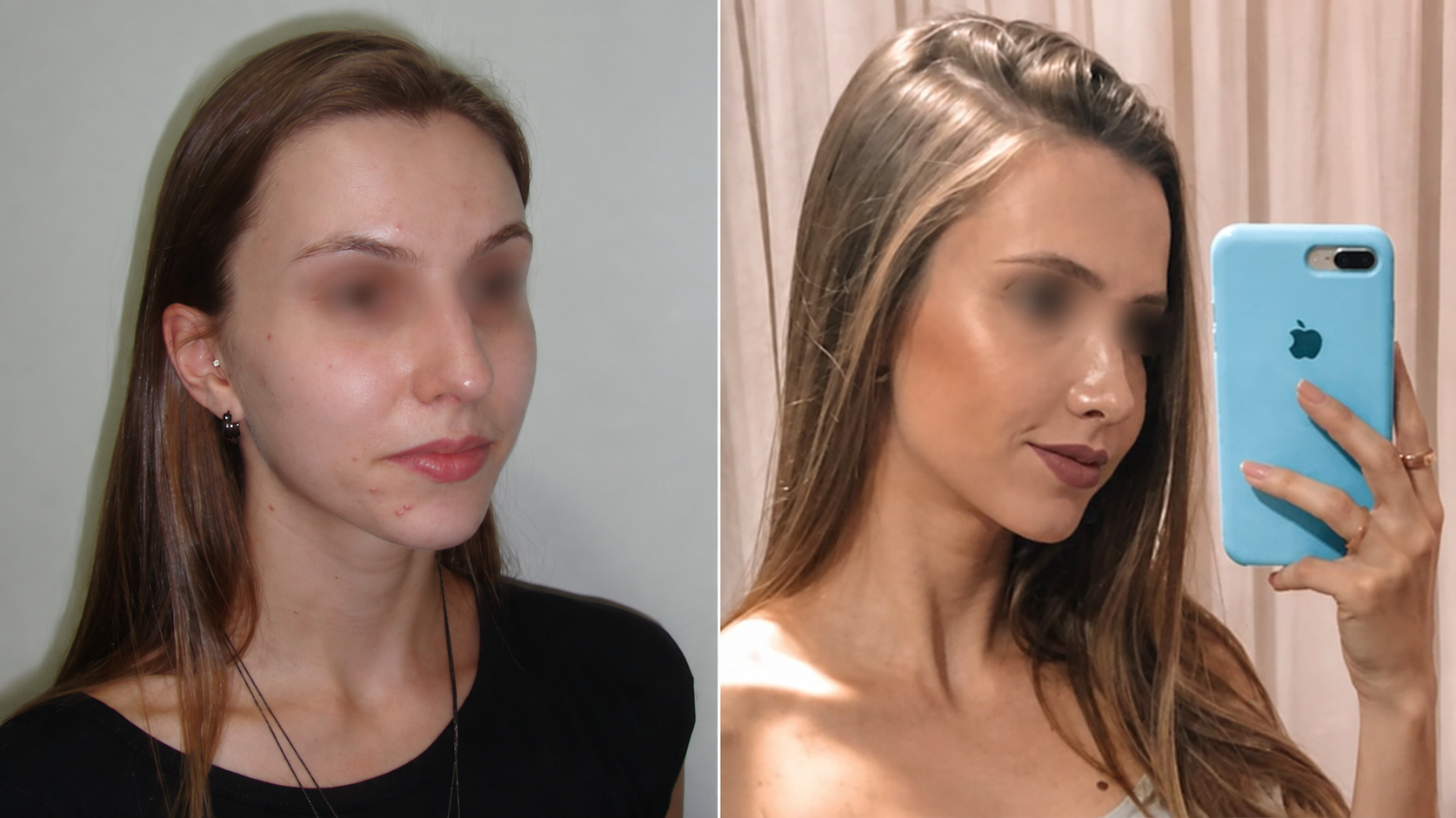
Hybrid open rhinoplasty case
What is rhinoplasty recovery like?
First days
- Swelling and bruising around the nose and eyes are expected and begin to subside after 7 to 10 days;
- Removal of the stitches and dressings usually takes place between 7 and 14 days.
First month
- Avoid intense physical activity for about 30 days;
- Protect the nose from impacts and from direct sun exposure during the first months.
Result over time
- The new shape is already noticeable as soon as the initial swelling subsides;
- The final result may take up to 12 months to settle — the nasal tip is the last area to lose its swelling.
No two rhinoplasties are alike
A subtle and harmonious correction is what makes a rhinoplasty look natural. The goal is not to deliver a “standard nose,” but the nose that suits that face: each person, depending on their features, skin thickness, dorsal height, chin projection, and facial proportions, has a rhinoplasty planned specifically for their case.
Well performed, rhinoplasty brings lightness, harmony, youthfulness, and beauty to the face — without onlookers being able to say exactly what changed.
Important note: no result in plastic surgery can be guaranteed. The outcome depends on nasal anatomy, skin thickness and quality, the individual healing pattern, previous surgeries, and adherence to postoperative instructions.
Rhinoplasty cases
About the images in this section The images are for educational purposes and illustrate indications for rhinoplasty. The results shown are individual and do not represent a guarantee of results: each patient’s outcome depends on nasal anatomy, skin thickness and quality, the degree of cartilage support, the individual healing pattern, the existence of previous surgeries, smoking, comorbidities, and adherence to postoperative instructions. Complications are possible in any surgery, including asymmetries, dorsal irregularities, residual or recurrent hump, changes in sensation, breathing changes, and the need for a complementary procedure. The images have not been edited and the patients are not identifiable. All photographs are of patients operated on by Dr. Marco Longo, plastic surgeon, CRM-SP 122.172 · RQE 58.398.
Rhinoplasty cases in Dr. Marco Longo’s Instagram highlights
Visit the links below to see Dr Marco Longo’s rhinoplasty cases on
Instagram:
Rhinoplasty cases in Dr Marco Longo’s Instagram highlights
Safety first
Before any surgery, we individually assess factors such as biological age, comorbidities, thrombosis risk, nutritional status, and preoperative laboratory tests. The protocol includes a complete laboratory panel, thromboembolic risk stratification, preoperative optimization, and the choice of a hospital setting appropriate to the scale of the procedure.
Read more in Surgical Safety and in Risks of plastic surgery: what you need to know.
Schedule your evaluation
Rhinoplasty is an individualized surgery: the access route, the technical principle, the treatment of the dorsum and tip, and the need for grafts are defined based on the physical examination and the goals of each patient.
Dr. Marco Longo — Plastic Surgeon CRM-SP 122.172 · RQE 58.398 Specialist in Rhinoplasty from USP · Preceptor of the USP Rhinoplasty Group for more than 5 years. Full Member of the Brazilian Society of Plastic Surgery (SBCP) PhD from the University of São Paulo (USP) Fellowships: NYU and Memorial Sloan-Kettering Cancer Center (New York) Reviewer for the journal Aesthetic Plastic Surgery 15 years of experience in plastic surgery
Alameda Min. Rocha Azevedo, 38 — Suite 1104 — Cerqueira César — Ciragan Office — São Paulo/SP WhatsApp: (11) 99892-5150 dr.marco.longo@gmail.com
[See clinical cases on Instagram]
Frequently asked questions about rhinoplasty
What is the difference between rhinoplasty and septorhinoplasty?
A rhinoplasty treats the aesthetics of the nose. A septorhinoplasty performs the same aesthetic reshaping and corrects the nasal septum, improving breathing. Because aesthetic and breathing complaints often go together, septorhinoplasty is very common in practice.
How long does rhinoplasty surgery take?
From 3 to 5 hours, performed under general anesthesia. Secondary and tertiary rhinoplasties tend to take longer, because they require reconstruction with grafts.
Is rhinoplasty performed under general anesthesia?
Yes. We use general anesthesia because it offers greater comfort to the patient and greater safety, with a protected airway throughout the procedure.
Preservation or structural rhinoplasty: which is best?
There is no best one in absolute terms. Preservation rhinoplasty maintains the native anatomy and delivers a dorsum with fewer irregularities; structural rhinoplasty rebuilds the support with grafts and delivers precise, durable definition of the tip. In most cases the best plan is hybrid: preservation on the dorsum and structural on the tip. Recent systematic reviews show equivalent functional results between the two.
Open or closed rhinoplasty: which to choose?
The closed approach has no cut outside the nose and is indicated for smaller surgeries and repairs. The open approach uses a small incision on the columella and allows better work on the aesthetics of the nasal tip. The available meta-analysis shows no difference in satisfaction, breathing function, or complications between the two routes — the choice comes from the planning of each case.
Does rhinoplasty leave a scar?
With the closed technique, there is no external scar: all incisions are inside the nostrils. With the open technique, there is a small scar on the columella, between the nostrils, which usually becomes discreet after it matures.
Is it always necessary to break the nasal bone?
No. The planned fracture of the nasal bones (osteotomy) is performed only when indicated — for example, to narrow the bony base or correct a deviation. In many cases, the treatment of the dorsum is resolved with bone rasping alone or with the preservation technique.
When does the swelling in the nose go down?
Swelling and bruising begin to subside after 7 to 10 days, and it is during this period that the new shape starts to show. Residual swelling, especially of the nasal tip, decreases progressively over the following months.
When will I see the final result of my rhinoplasty?
The final result may take up to 12 months to settle. The tip is the last area to stabilize, especially in thicker skin.
When can I go back to working out after rhinoplasty?
Intense physical activity should be avoided for about 30 days. The nose also needs to be protected from impacts and from direct sun exposure in the first months. Clearance is gradual and defined at the follow-up visits.
Does rhinoplasty improve breathing?
It can, when there is a functional indication. If there is a deviated septum, nasal valve collapse, or a structural change in the airways, these corrections are made during the same surgery. In patients with normal breathing, the goal is to preserve function — that is why tip planning uses structural grafts, and not just the removal of cartilage.
What is secondary rhinoplasty?
It is rhinoplasty performed on a nose that has already been operated on. When there have been two or more previous surgeries, it is called tertiary rhinoplasty. These are more complex cases, which require more operative time and, in general, grafts to rebuild the lost structure.
Where does the cartilage used in the grafts come from?
From three sources, according to the needs of the case: nasal septum (first choice, when available), ear cartilage (auricular concha), and costal cartilage (rib), the latter indicated when a larger amount of cartilage or more rigid support is needed — a situation typical of secondary and tertiary cases.
Does rhinoplasty change the face a lot?
It changes the harmony of the face, which is different from changing one’s identity. Planning starts from each person’s features: the same hump, on two different faces, calls for different corrections. The goal is a nose that looks as if it had always belonged to that face.
Is there a minimum age for rhinoplasty?
Aesthetic nose surgery is only considered after facial growth is complete, which occurs at different ages in men and women. The evaluation is individual and considers skeletal maturity, functional indication, and emotional maturity for the procedure.
Can I wear glasses after rhinoplasty?
Resting glasses on the nasal dorsum must be avoided during the consolidation period, especially when an osteotomy was performed. The alternatives (adapted fixation, contact lenses) and the exact timeframe are advised case by case during the postoperative period.
Scientific references
- Ribeiro LFS, De Freitas LR, Udoma-Udofa OC, et al. Dorsal preservation versus dorsal reduction rhinoplasty techniques for aesthetic and functional outcomes: a systematic review and meta-analysis. J Plast Reconstr Aesthet Surg. 2025;107:101-118. doi:10.1016/j.bjps.2025.05.044 — PMID 40580891
- Kim DH, Jang DW, Hwang SH. Comparison of patient-reported outcomes between dorsal preservation and conventional dorsal hump reduction rhinoplasty: a systematic review and meta-analysis. Aesthetic Plast Surg. 2025;49(17):4846-4856. doi:10.1007/s00266-025-04828-6 — PMID 40195129
- Chan C, North AS, Khademi Mansour HR, Saban Y, Joshi A. Functional outcomes of dorsal preservation rhinoplasty: a systematic review and meta-analysis. Facial Plast Surg. 2026 Aug 19 (online ahead of print). doi:10.1055/a-2927-6789 — PMID 42532128
- Barnawi AB, Alshehri AF, Alanazi A, et al. Comparison of preservation rhinoplasty versus conventional rhinoplasty techniques: a systematic review of aesthetic and functional outcomes. Front Surg. 2026;13:1788643. doi:10.3389/fsurg.2026.1788643 — PMID 42523890
- Abi Zeid Daou C, Jalkh RM, Semaan ZM, Daou AM. Outcomes of open versus closed rhinoplasty, a systematic review and meta-analysis. Plast Reconstr Surg Glob Open. 2025;13(8):e7047. doi:10.1097/GOX.0000000000007047 — PMID 40771258
- Buba CM, Patel PN, Saltychev M, Kandathil CK, Most SP. The safety and efficacy of spreader grafts and autospreaders in rhinoplasty: a systematic review and meta-analysis. Aesthetic Plast Surg. 2022;46(4):1741-1759. doi:10.1007/s00266-021-02735-0 — PMID 35031825
- Alessandri-Bonetti M, Costantino A, Cottone G, et al. Efficacy of septoplasty in patients with nasal obstruction: a systematic review and meta-analysis. Laryngoscope. 2023;133(12):3237-3246. doi:10.1002/lary.30684 — PMID 37017244
- Tsikopoulos A, Tsikopoulos K, Doxani C, et al. Piezoelectric or conventional osteotomy in rhinoplasty? A systematic review and meta-analysis of clinical outcomes. ORL J Otorhinolaryngol Relat Spec. 2020;82(4):216-234. doi:10.1159/000506707 — PMID 32320977
- Wang Q, Liu J, Chen Z. Clinical outcomes of rib graft use in rhinoplasty: a meta-analysis. BMC Surg. 2025;25(1):314. doi:10.1186/s12893-025-03022-4 — PMID 40696315
- Rot P, Krzywdzińska S, Grab P, Jurkiewicz D, Chloupek A, Sobol M. The Rhinoplasty Outcome Evaluation (ROE) questionnaire in rhinoplasty: a systematic review and meta-analysis. J Clin Med. 2024;13(16):4642. doi:10.3390/jcm13164642 — PMID 39200785
Content for informational and educational purposes, in accordance with CFM Resolution No. 2.336/2023. It does not replace an in-person medical consultation. Results vary according to the individual characteristics of each patient and cannot be guaranteed.
Dr. Marco Longo — CRM 122.172 — RQE 58.398
Plastic Surgeon — PhD | USP
Specialist in Rhinoplasty from USP.
Follow us on Instagram:
 https://www.instagram.com/drmarcolongo/
Visit the new YouTube channel :
 https://www.youtube.com/@drmarcolongo
Learn more about Dr Marco Longo – Plastic Surgeon
If you have any questions, please send them to: dr.marco.longo@gmail.com