Reverse Abdominoplasty: what it is, who it is indicated for and why the scar stays hidden
Reverse abdominoplasty is a surgery that removes excess skin from the upper abdomen — above the navel — with the scar placed in the fold beneath the breasts, where it is practically invisible. It is a modern and effective alternative for those who have laxity in this area without needing a traditional abdominoplasty (tummy tuck).
What is reverse abdominoplasty?
Reverse abdominoplasty is a variation of abdominal surgery that acts exactly where traditional abdominoplasty does not reach with the same efficiency: the upper part of the abdomen, above the navel.
While classic abdominoplasty removes excess skin from the lower region — with a scar along the bikini line — reverse abdominoplasty works from the top down. The excess skin is removed through the upper part, and the scar is placed in the inframammary fold — the natural crease located just below the breasts.
The result? A scar that stays completely hidden under the breasts, practically invisible both from the front and in underwear.
Why is it called “reverse”?
The name comes precisely from the direction of the procedure. In conventional abdominoplasty, the incision is made in the lower part of the abdomen and the skin is pulled downward. In the reverse technique, the process is inverted: the incision is in the upper part and the skin is pulled upward — hence the name “reverse”.
Who is it indicated for?
Reverse abdominoplasty is especially indicated for patients who have:
Laxity or excess skin above the navel, with no need to correct the lower abdomen. In these cases, performing a traditional abdominoplasty would be a larger procedure than necessary — and would leave a scar in the bikini area without a real indication.
Patients who are already going to undergo breast surgery (breast reduction, breast lift (mastopexy) or implant placement). Since these surgeries already involve an incision in the inframammary fold, reverse abdominoplasty can be performed through the same scar, taking advantage of the existing access. This means solving two problems in a single surgery, with no extra scar at all.
Patients who do not want the traditional abdominoplasty scar in the bikini area, but have localized laxity above the navel that bothers them.
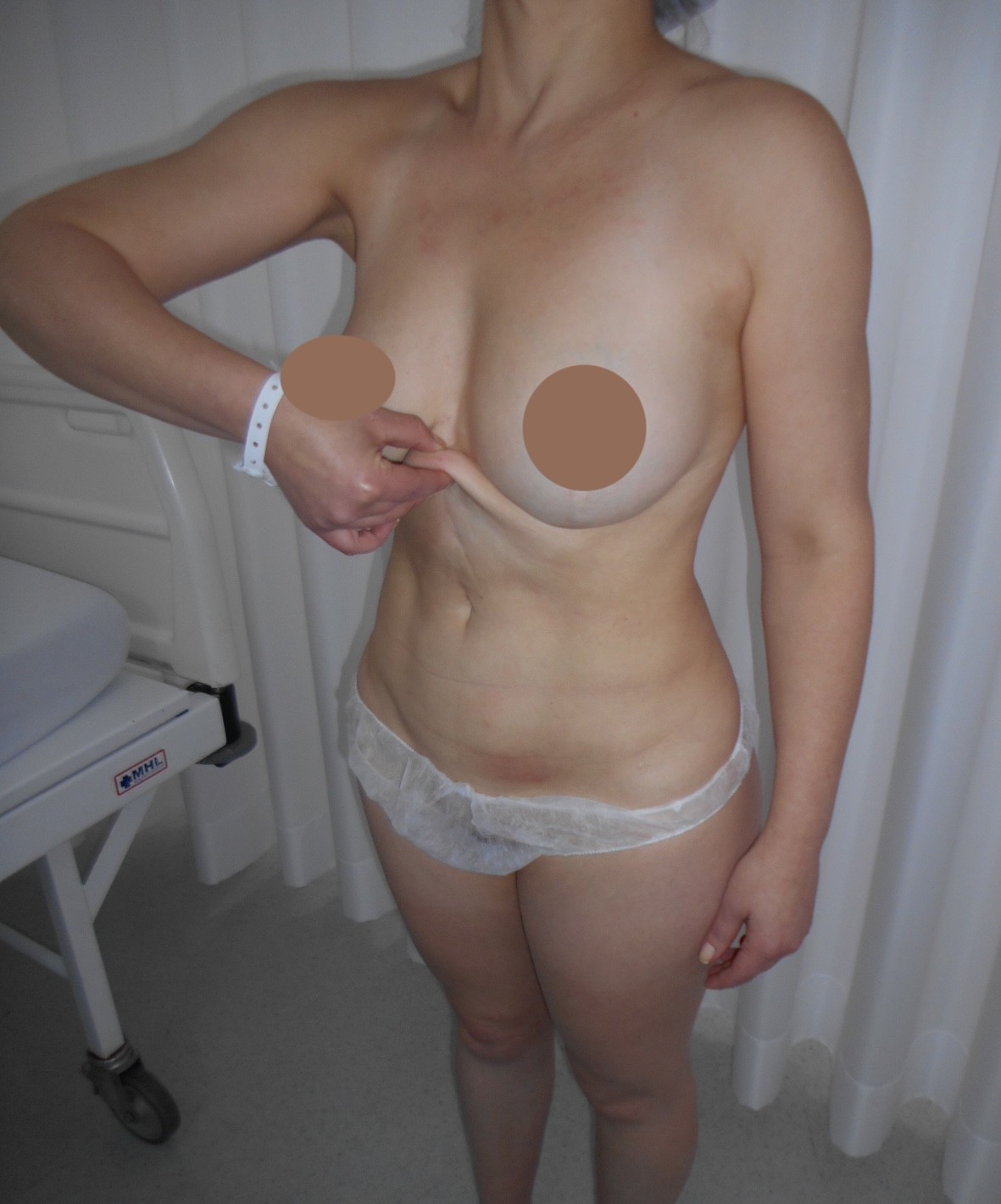
Test – pulling the skin above the navel demonstrates the laxity
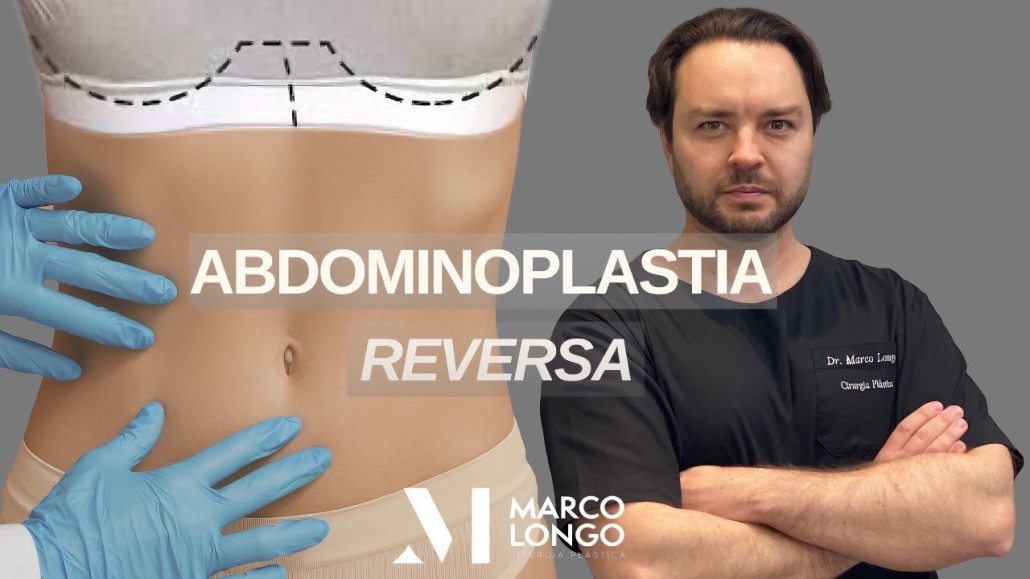
Watch the video in which Dr. Marco Longo explains everything about reverse abdominoplasty.
What can be done during surgery?
Depending on each patient’s needs, reverse abdominoplasty may include:
Skin resection only — removes the excess skin in the upper abdomen through the incision in the breast fold. Indicated for cases of moderate laxity, with no need to work on the muscles.
Skin resection with undermining and plication — in addition to removing the excess skin, the surgeon undermines the tissue above the navel and performs plication (suturing) of the muscles in this region. Indicated for cases where there is also muscle laxity above the navel.
The decision on which technique to use is made during the consultation, after an individualized evaluation of each patient.
What is the great advantage of the scar in the breast fold?
The reverse abdominoplasty scar is placed exactly in the natural crease below the breasts — an area that, by itself, already forms a natural shadow. This makes it:
- Invisible from the front — covered by the breast
- Unnoticeable in a bikini or bra — it stays completely within the line of the garment
- Aesthetically well tolerated — even in tight clothing or low necklines
For those who are already going to have breast surgery, the advantage is even greater: there is no additional scar at all. Everything is resolved through the same incision that would already be made.
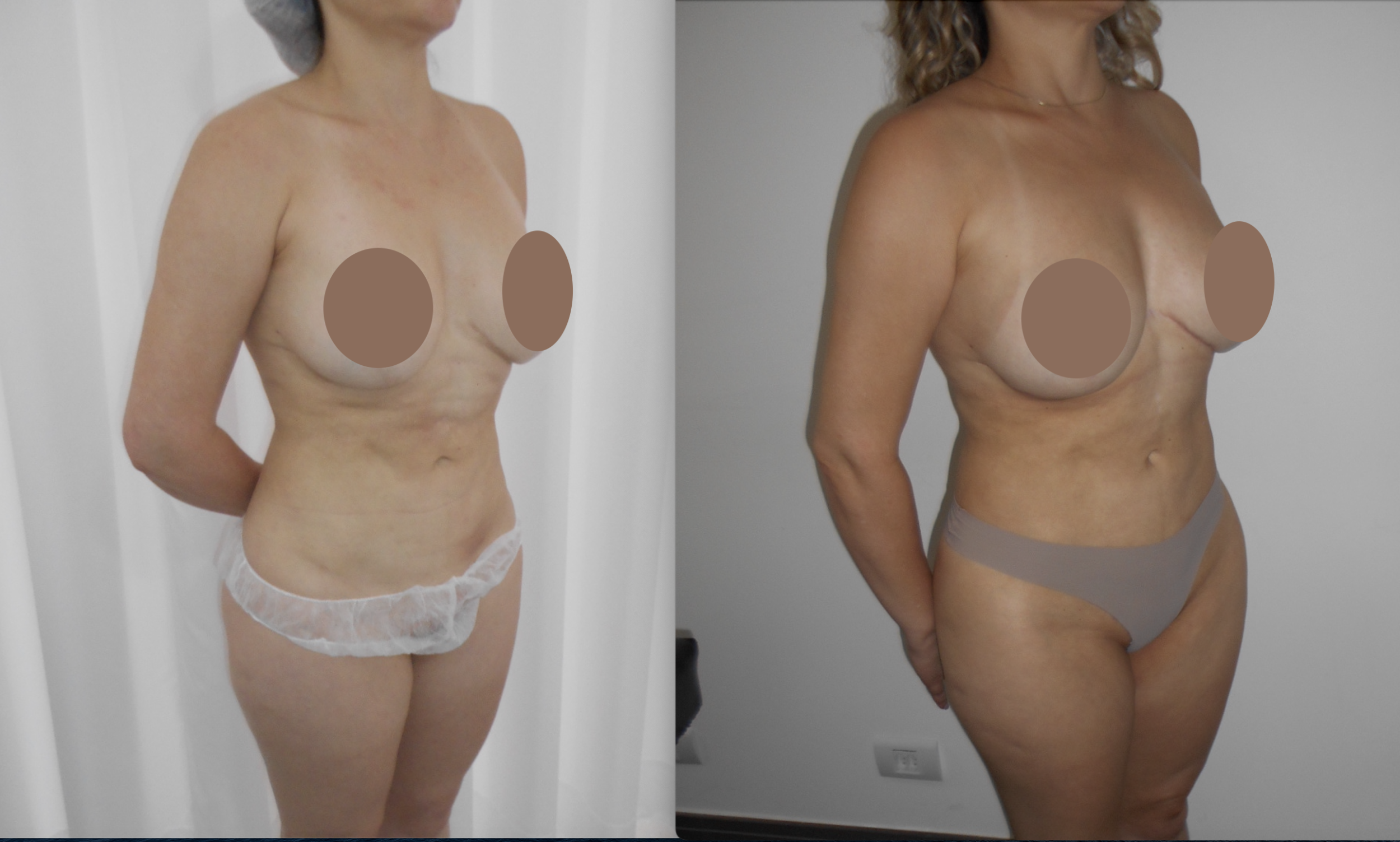
PRE and POST-OP 7 months – note the improvement of the abdomen with reverse abdominoplasty surgery (without plication)
Reverse abdominoplasty and breast surgery: the smartest combination
One of the most interesting indications for reverse abdominoplasty is precisely when it is performed together with breast procedures. When the patient is going to have:
- Breast reduction or breast lift — which already involve an incision in the breast fold
- Breast implant placement — which frequently uses the same access route
…reverse abdominoplasty can be included in the same surgical procedure, with no additional cost in terms of scarring. The laxity above the navel is corrected “as a bonus”, through the same incision the breast surgery already required.
This type of combined surgical planning is one of the points that set a good preoperative evaluation apart: identifying which problems can be solved together, safely, reducing the number of surgeries and scars.
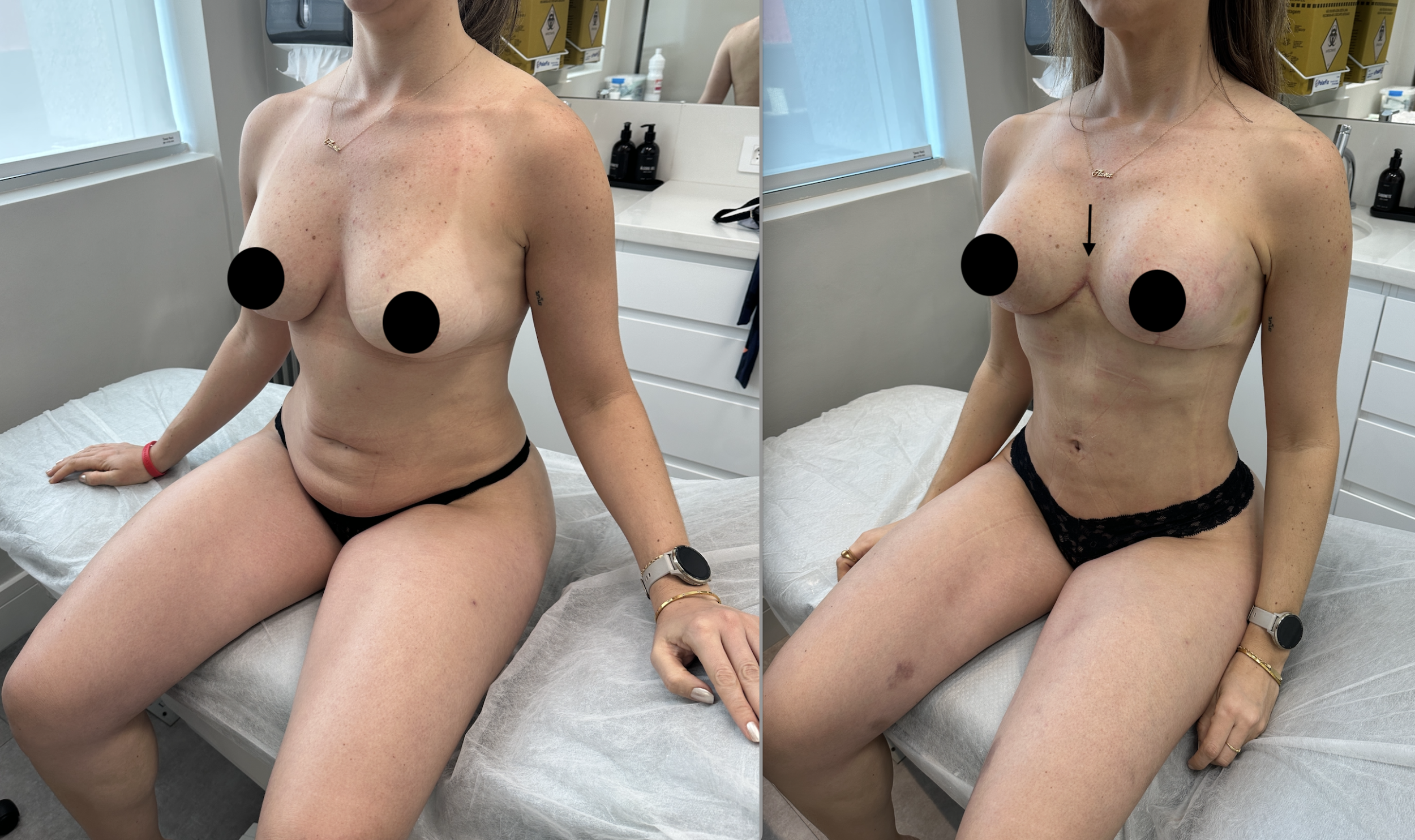
PRE and POST – Reverse Abdominoplasty with Breast Lift with Implant Exchange and HD Lipo (High-Definition Liposuction)
Reverse or traditional abdominoplasty: how to choose?
The choice between the two depends on where the main problem is:
| Traditional Abdominoplasty | Reverse Abdominoplasty | |
|---|---|---|
| Region treated | Mainly below the navel | Mainly above the navel |
| Scar position | Bikini line (lower region) | Breast fold (upper region) |
| Corrects diastasis | Yes — along its entire length | Yes — in the portion above the navel |
| Ideal when | Laxity in the lower abdomen and navel | Laxity above the navel |
| Combines with breast surgery | Yes, but with separate scars | Yes — can use the same scar |
In some cases, the two techniques can be performed together — when there is laxity both above and below the navel. An individualized evaluation is essential to define the best plan.
Frequently asked questions about reverse abdominoplasty
Does reverse abdominoplasty eliminate localized fat? Not directly — it removes excess skin. When there is associated localized fat, liposuction can be combined with the procedure to further improve the result.
Is the recovery different from traditional abdominoplasty? In general, recovery from reverse abdominoplasty is somewhat smoother than from traditional abdominoplasty, as the procedure is less extensive. Return to light activities usually occurs between 7 and 14 days, with specific instructions from the surgeon.
Does the scar disappear completely? Like every surgical scar, it exists — but it is placed in a location of excellent natural concealment. Over time and with proper postoperative care, it tends to lighten significantly and become very discreet.
Can I have reverse abdominoplasty without having breast surgery? Yes. Reverse abdominoplasty can be performed on its own, even in patients who will not undergo any breast procedure. In this case, the incision is made in the inframammary fold in the same way.
How do I know if I am a candidate?
The evaluation for reverse abdominoplasty mainly considers:
- The distribution of the laxity — whether it is above, below or along the entire length of the abdomen
- The quality and elasticity of the skin
- Whether there are planned breast procedures that could be combined
- The expectations and goals of the patient
If you have laxity in the area above the navel and want to understand whether reverse abdominoplasty is the most suitable option for your case, the path begins with a detailed consultation with a plastic surgeon specialized in body surgery.
Dr. Marco Longo is a plastic surgeon specializing in aesthetic body and breast surgery, a member of the Brazilian Society of Plastic Surgery (SBCP), the Brazilian Association of Plastic Surgeons (BAPS) and the American Society of Plastic Surgeons (ASPS), with a doctorate from the University of São Paulo School of Medicine (FMUSP). He sees patients in São Paulo.
Safety first. Before any surgery, we individually assess factors such as biological age, comorbidities and thrombosis risk, following protocols based on scientific evidence. Learn how we assess safety in each procedure →
Dr. Marco Longo — CRM 122.172 — RQE 58.398
Plastic Surgeon — PhD | USP
Specialist in High-Definition Body Contouring
Follow us on Instagram:
 https://www.instagram.com/drmarcolongo/
Visit the new YouTube channel:
 https://www.youtube.com/@drmarcolongo
Learn more about Dr Marco Longo – Plastic Surgeon
If you have any questions, please send them to: dr.marco.longo@gmail.com